
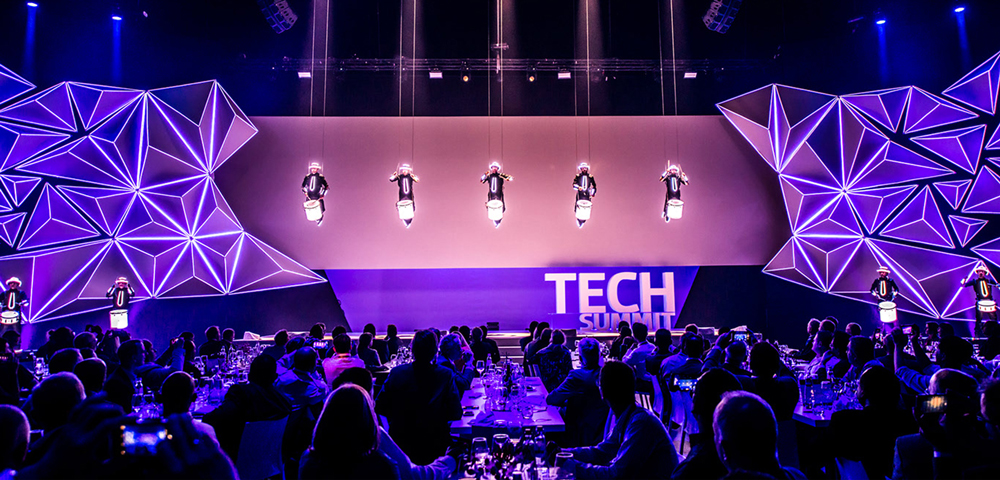
A public relations event refers to the planning and implementation of PR activities, which is a commonly used technical method in the work of corporate planning departments, PR companies, planning companies, and advertising agencies. Successful PR activities can continuously improve brand awareness, recognition, reputation, loyalty, and customer satisfaction, enhance the organization's brand image, change public perception of the organization, accumulate intangible assets, and promote sales to varying degrees.
PR Techniques
There are conventional methods to follow for PR event planning, but there are also many skills involved. It's 30% planning and 70% implementation.
A. Quantified Objectives
PR activities, especially large-scale ones, often consume a lot of human, material, and financial resources. The launch and promotion cost for a new product in a central city generally exceeds one million yuan. Why invest such a large amount in PR? It is for the company's communication needs, to build brand awareness, recognition, and reputation, and to encourage more target consumers to purchase the product. These are the objectives of a new product launch PR event. It is not advisable to spend huge sums on an event without clear goals, nor is it worth doing if the objectives are unclear. I have encountered some health product companies that, upon seeing competitors holding holiday PR events, insist on doing the same, demanding even larger scale, higher specifications, and more press releases, yet they cannot explain why they are doing it, what selling points or concepts they want to communicate, and have not set any objectives. Some companies set many goals for their PR activities, such as improving awareness and reputation, and boosting sales, but they are not quantified (the percentage increase in awareness and reputation, or the monetary amount of sales growth). The direction is vague, confusing purpose with objective. Objectives must be quantified; they should not be hopeful observations but achievable targets. Only with quantified objectives can the planning and implementation of PR activities have a clear direction and avoid detours.
B. Focused Selling Point
A PR event is a platform to showcase a company's brand image, not an ordinary sales promotion. It is necessary to determine the event's selling point (theme) and use it as the basis and main thread for planning. Many PR events spend a lot of money, yet people cannot remember what the event was about or form a deep impression. Only by distilling a clear selling point, creating the 'eye' of the PR event, and communicating it, can relevant resources be integrated to achieve the event's objectives. Here, the selling point is the most exciting and vivid part of the PR event's design. Years after the event, most details may be forgotten, but there should still be one memorable segment. PR event planning needs to create such a remarkable climax, designing this segment to be more unique, relevant, and easy to spread.
C. PR Media
As new PR tools and technologies continue to emerge, just like news media and advertising media, PR media is also undergoing a revolution, with emerging media such as the internet being applied to PR activities. Little do people realize that the PR event itself is a communication medium, possessing many characteristics of mass media. Compared to mass media, it only does not exert a communication effect before the event is implemented. Once the event is launched, it can generate a good communication effect. Due to its characteristic of balancing organizational and public interests, PR activities have broad social communication capabilities and can attract public and media participation on their own, using the event as a platform to spread through the public and mass media. When planning and implementing PR activities, preparing corresponding event brochures, contact lists, internal publications, promotional materials, etc., to integrate communication resources, can enhance the value and effectiveness of PR activities. In the autumn of 2000, a certain expo held in Beijing encountered communication obstacles due to factors such as inadequate promotion, poor communication, and weak organization. The media resources of the expo itself were not explored or utilized, and even the event brochures were not distributed before the event hastily concluded, causing a very negative impact and greatly reducing its image in the public eye.
D. Research and Right to Speak
Many domestic PR companies, when conducting PR activities, omit the important step of public research due to a lack of public research awareness, limited research capabilities, low agency fees, tight schedules, and other reasons, which has become commonplace. Coming up with a good idea and picking an appropriate date to hold a PR event is a common problem among some so-called 'masters', which I cannot agree with. 'No investigation, no right to speak.' 'Know yourself and know your enemy, and you will win every battle.' Only by understanding one's own strengths and weaknesses, grasping public psychology and needs, mastering competitors' market dynamics, and conducting comprehensive analysis and prediction, can one leverage strengths and avoid weaknesses, adjust their PR strategy, and win the success of PR activities. PR practice shows that the feasibility of PR activities, budget, public distribution, venue traffic conditions, relevant policies and regulations, etc., should all be investigated in detail, then compared, an analysis report formed, and finally an objective decision made.
E. Comprehensive Planning and Rigorous Execution
When I was lecturing to students in the planning department of Beijing Commercial Economy College, many classmates asked what techniques are involved in PR event planning. I mentioned several points, but emphasized one: comprehensiveness. This is because PR activities give us only one chance for success or failure. PR activities are not like filming movies or TV shows that can be reshot; every time is a live broadcast, and once a mistake occurs, it cannot be remedied, so we must not take it lightly. I have a profound lesson in this regard: when organizing a human resources PR event, one segment was to invite relevant leaders to inscribe calligraphy after the press conference, and this information had already been released to the media. Due to the negligence of a staff member in charge, the calligraphy brush was forgotten, and it was too late to go back and fetch it. The leader was about to leave, so this part of the event had to be temporarily cancelled. As soon as this problem occurred, it attracted media attention. Some of them thought that the leader's support for the event had changed, which affected the event's press release rate. Two years have passed since this incident, and I still feel very regretful when I think about it.
F. Crisis and Opportunity
Large-scale PR activities have a certain degree of uncertainty. To prevent accidents, PR personnel should have a strong sense of crisis during the planning and implementation process, fully predict various possible risks, and formulate corresponding countermeasures. Only by eliminating all risks can the formulated plan be guaranteed to be realized. When an emergency occurs, one must adapt to the situation, not panic, not complain, keep a clear head, stay calm, quickly find out the cause, and confirm the truth of the facts. If a negative impact has been caused, one method is to promptly apologize to the public to prevent recurrence, avoid establishing an adversarial relationship with the media, prevent negative reports, and strategically handle media and public relations; otherwise, restoration will be difficult. Another method is to turn the crisis into an opportunity, use unexpected events to expand the scope of communication, use public opinion to convey sincerity, win public support, and turn passive into active. In the summer of 1999, when I organized the 'Xi'an International PR Planning Advanced Lecture', a well-known speaker might not have been able to attend due to a conflict with two conferences. Facing the potential crisis of being unable to fulfill promises to participating entrepreneurs, I had to use all my skills, moving them with emotion and motivating them with benefits, finally persuading the other party and resolving the potential crisis. A few years ago, a customer complained about quality problems with a Panda radio due to improper use. Facing the public environment already exposed by the media, Panda Group did not adopt an argumentative or confrontational attitude with the public. Instead, the leader personally visited the customer to apologize, replaced it with a new radio for free, and published the customer's photo in a full-page newspaper to express gratitude. The Panda brand turned the crisis into an opportunity, and its reputation increased dramatically.
G. Evaluation
When evaluating PR activities, we often only assess the implementation effect, which is not comprehensive enough. If, in addition to the implementation effect, the evaluation also considers whether the event objectives are correct, whether the selling point is clear, whether the funding input is reasonable, whether the input and output are proportional, whether public data collection is comprehensive, whether the media mix is scientific, whether public and media relations are more solid, whether social resources have increased, and whether the satisfaction of all parties is quantified, then the overall effect of the PR activity can be reflected. This kind of comprehensive evaluation is conducive to event performance assessment, assigning responsibility to individuals, and can also increase experience, laying a foundation for the planning and implementation of the next PR activity.
H. Problem Solving
Society has had different misunderstandings about PR activities in different periods, and the misleading guidance of some media has further deepened the spread of this wrong perception. In recent years, there has been a new misunderstanding about PR, equating PR activities with sales promotions. In fact, the purposes, focuses, and methods of the two are different. The goal of PR activities is to improve reputation and enhance affinity; the goal of promotional activities is to increase sales and market share. The focus of PR activities is the public, media, and government, while the focus of promotional activities is consumers. Enterprises need both marketing and PR functions, and the two functions cannot be used interchangeably. PR is a social behavior, while marketing is an economic behavior. PR activities focus on the public, while promotional activities focus on consumers. PR and the market are quite different, and marketing methods are not suitable for solving PR problems. The public for PR activities is very diverse, and consumers are only one type of public. Different publics require different PR methods. Therefore, we must get out of the misunderstanding that 'PR activities are promotions' and use PR methods to solve PR problems.
The planning and implementation of PR activities require the accumulation of experience. PR activities should emphasize planning, but even more so, implementation. There are still many techniques that can be used in the planning and implementation of PR activities. As long as we continuously summarize experience and apply it to practice, we will definitely be able to plan and implement more influential and successful PR activities.
Principles of PR Activities
Successful enterprises cannot do without PR activities. PR activities are an important part of product marketing activities. PR activities can enhance corporate image, expand corporate and product awareness, promote product sales, squeeze out competitors, and increase product market share.
In different market periods, the purpose and role of PR activities are also different.
In the initial stage of market launch, the main purpose of PR activities is to shorten the market development time and enter the growth period as soon as possible.
In the market growth stage, PR activities are mainly to further promote product sales and boost market development.
In the market maturity and decline stages, the main purpose of PR activities is to extend the product life cycle.
Not all PR activities can achieve the above purposes and effects. If the planning is improper, the organization is lacking, or the implementation is weak, PR activities may also play the opposite role.
Successful PR activities should follow ten major principles:
1. Spirit of the Times
The theme of the PR activity should adapt to the social environment, keep pace with the times, conform to the spirit of the times, and align with the current international and domestic situation.
2. Comply with Laws and Regulations
The content of PR activities should comply with national laws and regulations. PR activities that violate national laws and regulations will be difficult to carry out. Even if implemented, they may backfire and produce the opposite effect.
3. Abide by Social Morality
The content of PR activities should conform to social morality. PR activities that violate social morality will inevitably cause public criticism and condemnation from public opinion, negatively affecting the corporate image and products.
4. Social Civilization
The construction of spiritual civilization is an important task that governments at all levels attach great importance to. As long as it is conducive to the construction of social spiritual civilization, governments at all levels will actively support. If PR activities can receive government support, the effect of the event is often twice the result with half the effort.
5. News Publicity
The main purpose of PR activities is to expand corporate and product awareness, and media participation is indispensable. This requires PR activities to be innovative in planning, with novel themes and content. Only PR activities with original creativity and unique content have news value and are worth reporting.
6. Operability
PR activities cannot be divorced from social reality. When planning, it is necessary to consider the national conditions, public sentiment, and folk customs, fully consider the various difficulties that may be encountered in operation, and formulate corresponding countermeasures. Cooperating with government departments or authoritative organizations can greatly reduce operational difficulty and increase the success rate of the event.
7. Continuity
Market development and maintenance are long-term and arduous projects that cannot be achieved overnight. Even if a PR event is very successful and sensational, its impact is limited and far from meeting market needs. Therefore, continuity must be emphasized when planning PR activities. Under the premise of a unified theme, several or even more than a dozen PR activities should be continuous, linked, and connected, creating wave after wave of impact on the market.
8. Closely Linked to Product Connotation
PR activities should be combined with product promotion. The theme and content of PR activities should be closely related to the product's connotation and characteristics. The participants of PR activities should also basically match the product's target audience.
9. Image Enhancement
Enhancing corporate image is one of the main purposes of holding PR activities. Positive, proactive, contemporary, law-abiding, and socially beneficial PR activities can quickly enhance corporate image. PR activities that damage corporate image are undoubtedly lifting a rock only to drop it on one's own feet.
10. Sales Promotion
The ultimate goal of business operation is to sell products and obtain profits. The purpose of PR activities is the same. If PR activities do not positively enhance the corporate image or significantly promote product sales, even if they have a huge social impact, they cannot be considered successful PR activities.
PR Event Planning Proposal
PR event planning can effectively improve corporate awareness and brand image, influence public perception of the company, and help enterprises accumulate potential intangible assets. Moreover, it can promote corporate sales to varying degrees. Therefore, a PR event planning proposal is a basic element that an enterprise must do well in PR activities. So, what does a PR event planning proposal specifically include? Below, a PR event planning company will introduce it to you for your reference.
1. Analysis of the current status and causes of corporate image. Analyzing the current status and causes of corporate image means requiring a certain diagnosis of your corporate image and current situation before PR planning. This provides an effective basis for the enterprise to choose PR activity objectives and methods.
2. The enterprise must determine target requirements. Generally speaking, the problem that the enterprise needs to solve is the specific goal of the PR activity. It must not only be subordinate to the overall goal of establishing a corporate image, but also the PR activity goal should be clear, specific, feasible, and operable during planning.
3. Design the corporate theme. The theme of a corporate PR activity is actually a highly condensed summary of the PR activity content. It not only plays a guiding role in the entire PR activity, but also whether the theme design is excellent and appropriate has a great impact on the effectiveness of the public activity. The expression of the PR activity theme is diverse; it can be not only a slogan, but also a statement or an expression. The theme of a PR activity seems simple, but it is actually no easy task.
4. Analyze corporate publics. PR activities are carried out in different ways for different public objects, not like advertising, which spreads various information to the public through the media. Therefore, only by determining the public can we select the most effective PR activity plan. However, different public groups also have different requirements.
5. Selection of corporate activity methods. The selection of PR activity methods is the main content of corporate planning. The way to carry out PR activities is directly related to the effectiveness of PR work. Choosing an activity method is a creative task. Whether the company's PR activities are novel and personalized depends on whether the planning personnel's creative thinking is active. Therefore, when choosing an activity method, the planning personnel's originality and potential should be fully utilized.
Types of PR Activities
PR activities include many types.
Roadshow: It mutually drives the product and the people at the sales terminal, increasing product awareness while selling the product, such as China Mobile, China Unicom, and mobile phone manufacturers.
Touring Exhibition: It is divided into static exhibitions and dynamic exhibitions. The so-called static exhibition is generally the static display of products, which mainly shows various characteristics of the products through video, text, pictures, etc., and is explained interactively by sales personnel.
Dynamic exhibitions allow customers to personally experience the actual use of the product, such as test drives, computer trials, etc.
New Product Launch: It highlights various characteristics of the product through artistic processing and exaggerated methods.
Press Conference: It promotes through interactive methods using a certain event as a topic.
Symposiums and Forums: They invite some professionals to conduct in-depth research and discussion based on certain characteristics of the product.
Galas, such as customer appreciation meetings, mainly aim to close the distance between each other and improve relevance.